Your eyesight plays an important role in every aspect of daily life. Whether you are reading, driving, working on a computer, or enjoying time with your family, clear vision helps you stay independent and confident. Thanks to advances in ophthalmology, several safe and effective eye surgeries are available today to correct vision problems and restore eye health.
However, many people wonder, “Which eye surgery is right for me?” The answer depends on your age, eye condition, corneal thickness, prescription, lifestyle, and overall eye health.
If you are looking for the Best Eye Surgery Hospital in Hebbal, Yashoda Nethralaya offers advanced diagnostic facilities, experienced eye specialists, and personalized surgical solutions to help every patient achieve the best possible visual outcome.
In this guide, we explain the differences between LASIK, SMILE, ICL, and Cataract Lens Surgery so you can better understand which option may be suitable for you.
Why Choosing the Right Eye Surgery Matters
Not every vision problem requires the same treatment. While LASIK and SMILE are designed to reduce dependence on glasses or contact lenses, ICL surgery is ideal for certain patients who may not be suitable for laser procedures. Cataract surgery, on the other hand, restores vision that has become cloudy due to aging or other medical conditions.
A comprehensive eye examination is the first step in deciding the most appropriate treatment.
Symptoms That May Indicate You Need Eye Surgery
Although every condition is different, you should consult an eye specialist if you experience:
- Blurred or distorted vision
- Frequent changes in spectacle power
- Difficulty driving at night
- Glare or halos around lights
- Trouble reading despite wearing glasses
- Dependence on contact lenses with increasing discomfort
- Cloudy or dull vision
- Reduced contrast sensitivity
Early evaluation helps identify the underlying cause and allows timely treatment before vision deteriorates further.
How Doctors Diagnose the Right Eye Surgery
At Yashoda Nethralaya, every patient undergoes a detailed eye evaluation before surgery is recommended. The goal is to determine which procedure provides the safest and most effective outcome.
Diagnostic tests typically include:
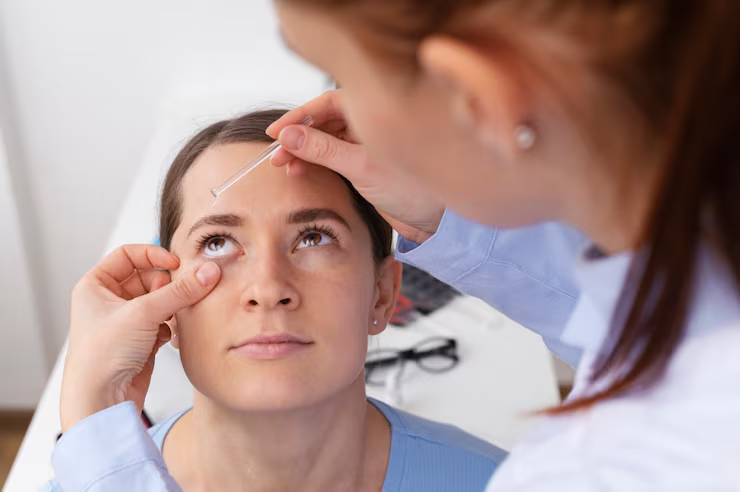
Comprehensive Eye Examination
Visual acuity, refractive error, eye pressure, and overall eye health are assessed.
Corneal Topography
This test maps the shape and thickness of the cornea to determine whether laser vision correction is suitable.
Corneal Thickness Measurement
Adequate corneal thickness is essential for LASIK and SMILE procedures.
Retinal Examination
The retina is carefully evaluated to rule out any underlying retinal disorders that may affect surgical planning.
Lens Evaluation
For older adults, the natural lens is examined to identify cataracts or age related lens changes.
After reviewing all findings, your ophthalmologist recommends the most appropriate procedure based on your individual needs rather than a one size fits all approach.
Understanding Your Treatment Options
LASIK Surgery
LASIK (Laser Assisted In Situ Keratomileusis) is one of the most commonly performed vision correction procedures.
It uses a laser to reshape the cornea so that light focuses correctly on the retina.
LASIK is generally recommended for:
- Nearsightedness
- Farsightedness
- Astigmatism
- Adults with stable spectacle power
Benefits include:
- Quick procedure
- Minimal discomfort
- Fast visual recovery
- Reduced dependence on glasses
SMILE Surgery
SMILE (Small Incision Lenticule Extraction) is a newer minimally invasive laser vision correction procedure.
Instead of creating a large corneal flap, SMILE removes a small piece of corneal tissue through a tiny incision.
SMILE is often preferred for:
- Moderate to high myopia
- Active individuals
- Patients with dry eye concerns
Advantages include:
- Smaller incision
- Faster healing
- Less disruption of corneal nerves
- Reduced postoperative dryness
Many patients appreciate the quicker recovery and minimally invasive nature of this procedure.
ICL Surgery
Implantable Collamer Lens (ICL) surgery is an excellent option for patients who may not qualify for LASIK or SMILE.
During the procedure, a specially designed lens is placed inside the eye without removing the natural lens.
ICL may be suitable for:
- Very high spectacle numbers
- Thin corneas
- Severe myopia
- Patients unsuitable for laser correction
The procedure provides excellent visual quality while preserving the natural cornea.
Cataract Lens Surgery
Unlike LASIK or SMILE, cataract surgery is performed when the natural lens becomes cloudy.
The cloudy lens is removed and replaced with a clear artificial intraocular lens (IOL).
Modern cataract surgery can also reduce dependence on spectacles by using advanced premium lenses.
It is recommended for patients experiencing:
- Blurred vision
- Glare while driving
- Difficulty reading
- Faded colors
- Poor night vision
As a trusted Laser Eye Surgery Hospital in Bangalore, Yashoda Nethralaya offers advanced cataract surgery with modern lens options tailored to individual lifestyle requirements.
Which Surgery Is Right for You?
The choice depends on several factors.
LASIK may be ideal if you have a stable prescription and adequate corneal thickness.
SMILE is often preferred for patients with myopia who want a minimally invasive laser procedure.
ICL works well for individuals with very high power or thin corneas who are not suitable candidates for LASIK.
Cataract Lens Surgery is the preferred option when vision loss is caused by cataracts rather than refractive error.
An experienced ophthalmologist will recommend the safest procedure after a complete eye examination.
Recovery After Eye Surgery
Recovery varies depending on the type of surgery performed.
Following LASIK or SMILE, most patients notice improved vision within one or two days. Mild irritation or watering usually settles quickly.
Patients undergoing ICL surgery generally recover within a few days, although follow up visits are important to monitor healing.
Cataract surgery patients often experience clearer vision within a few days, with gradual improvement over several weeks.
To ensure smooth recovery:
- Use prescribed eye drops regularly.
- Avoid rubbing your eyes.
- Wear protective eyewear if advised.
- Avoid swimming until your doctor permits.
- Attend all follow up appointments.
- Protect your eyes from dust and excessive sunlight.
Careful postoperative care helps achieve the best visual outcomes.
Why Choose Yashoda Nethralaya?
Choosing the right hospital is as important as selecting the right procedure.
Patients searching for the Best Eye Surgery Hospital in Hebbal choose Yashoda Nethralaya because of its commitment to quality eye care.
The hospital offers:
- Comprehensive eye evaluations
- Advanced diagnostic technology
- Modern laser vision correction procedures
- Premium cataract surgery options
- Personalized treatment planning
- Experienced ophthalmologists
- Patient focused care before, during, and after surgery
Whether you need refractive surgery or cataract treatment, the team focuses on delivering safe, effective, and customized care for every patient.
Frequently Asked Questions
1. How do I know whether LASIK or SMILE is better for me?
Your ophthalmologist will evaluate your corneal thickness, spectacle power, eye health, and lifestyle before recommending the most suitable option.
2. Can I undergo LASIK if I have a very high spectacle number?
Patients with very high refractive errors may benefit more from ICL surgery if LASIK is not considered safe.
3. Is cataract surgery only for elderly patients?
Although cataracts are more common with aging, they can also occur earlier because of diabetes, eye injury, certain medications, or other medical conditions.
4. How long does recovery take after laser eye surgery?
Most patients notice significant visual improvement within one to three days after LASIK or SMILE, although complete healing continues over the following weeks.
5. Why should I choose Yashoda Nethralaya for eye surgery?
Yashoda Nethralaya combines advanced technology, personalized treatment planning, experienced surgeons, and comprehensive postoperative care, making it a preferred Laser Eye Surgery Hospital in Bangalore for patients seeking safe and effective vision correction.
Meet Our Experienced Doctors
DR NAGESH B N
MBBS, MD (AIIMS, New Delhi), FICO
CATARACT, CORNEA AND REFRACTIVE SURGERY SPECIALIST
Experience: Over 15 years
Medical Director Dr. Nagesh B N has extensive experience in comprehensive ophthalmology, specialized in all types of Cataract surgery ( Phacoemulsification, Laser cataract surgery and SICS). He is also expert in all types of Refractive surgeries like SMILE, LASIK, PRK. He also specializes in all types of Corneal transplantations like DMEK, DSAEK, DALK, PKP.
At Yashoda Nethralaya, every patient receives individualized treatment based on thorough clinical evaluation, ensuring the most appropriate surgical option for long term visual health. The hospital continues to be recognized as the Best Eye Surgery Hospital in Hebbal, offering comprehensive eye care with advanced technology and compassionate expertise.